
How Arrest Warrants Work in Stafford County
An arrest warrant is criminal process. It lets an officer take a person into custody and bring them before the proper court. In Virginia, a judge, clerk, or magistrate with authority looks at a complaint and the facts behind it before signing. The document names the accused or gives a reliable description, states the offense, and says where the person must be taken. In Stafford County, the Sheriff's Warrant Section processes and tracks warrants, while the magistrate handles new complaints and bail. From there, the courts split the work. Circuit Court receives felony cases, General District Court handles misdemeanors and preliminary felony matters, and JDR Court covers juvenile and family issues.
Virginia Code §19.2-71 Sets Who May Issue Process
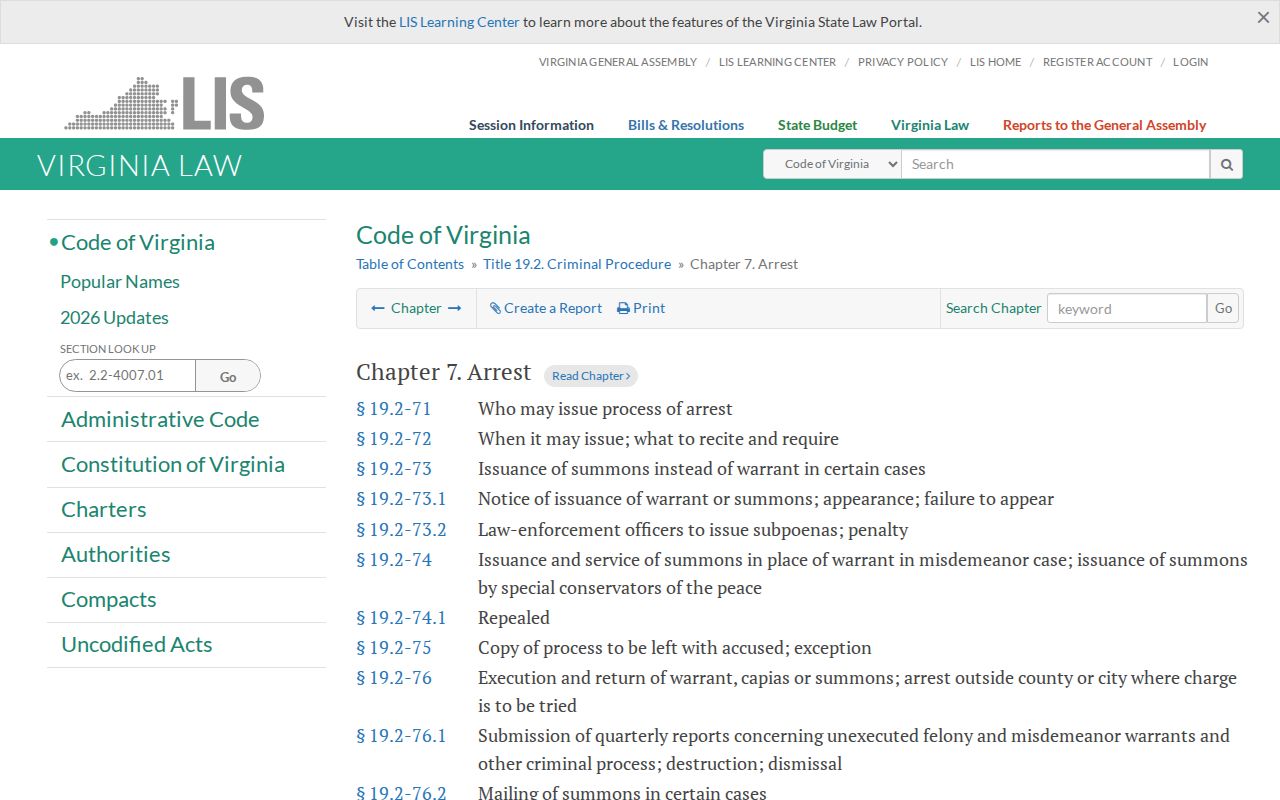
Who can sign a warrant in Stafford County comes straight from Virginia Code §§ 19.2-71 and 19.2-72. Judges, clerks, and magistrates each hold that power within their own roles. Before anything issues, the complainant and any witnesses are examined under oath. A felony complaint has to be in writing. Probable cause must back it. One limit matters here: a magistrate cannot issue a felony warrant on a private complaint alone, unless the Commonwealth's Attorney or law enforcement authorizes it. The Virginia arrest-process chapter spells out these rules, along with what a warrant must say and who may execute it. Stafford County courts follow that statutory process, and the Code chapter is the place to read it in full.
Public case results can be murky. If a Stafford County online entry is unclear, read the court and offense details with the clerk before drawing conclusions.
Arrest Warrants: What They Contain
Stafford County publishes no sample warrant row and no warrant-number format. A court entry can show case details yet hide other fields. Treat this schema as questions for the clerk, not as a promise of what appears online.
| Authority | Issuing magistrate, judge or clerk and the return court. |
|---|---|
| Case and process | Case number, issue date and a process number if the record releases it. |
| Offense | Charge, Code section, class and offense date when public. |
| Release | Bond amount and type, conditions or no-bond status, as set by the court. |
| Service and status | Issued, served, returned, recalled, quashed, satisfied or sealed, confirmed by the Sheriff or court. |
OCIS examples are court case numbers, not warrant-number samples.
The Stafford Magistrate Works at the Jail Campus
The magistrate who handles Stafford County cases sits at Rappahannock Regional Jail, 1745 Richmond Highway. The office runs 24 hours a day, seven days a week. Magistrates review complaints, issue arrest warrants, search warrants, and summonses, and hold bail hearings. Think of it as the process and bail office. It is not a public records counter. The state court system's Magistrate Services page details those duties statewide, while the Stafford resource list points you to the local route for warrant questions.
The Stafford Magistrate's Office answers at 540-659-2968. For case resolution, call the return court.
How Warrants Get Served in Stafford County
The Stafford Sheriff and his deputies serve local process throughout the county. Other directed officers may execute a warrant as law allows. No incorporated city police department operates inside Stafford County, so the Sheriff is the main local serving agency. The warrant unit also works with other jurisdictions when their process is served here. Virginia law lets a regional-jail officer execute a warrant on a person already in the jail. Service, booking, bail review, and case resolution are separate steps, so call the right office for each one. Reach the Sheriff's Warrants Section at 540-658-4421/22; Court Services and Civil Process is at 540-658-4430.
RRJ Intake Serves Process on People Already Held
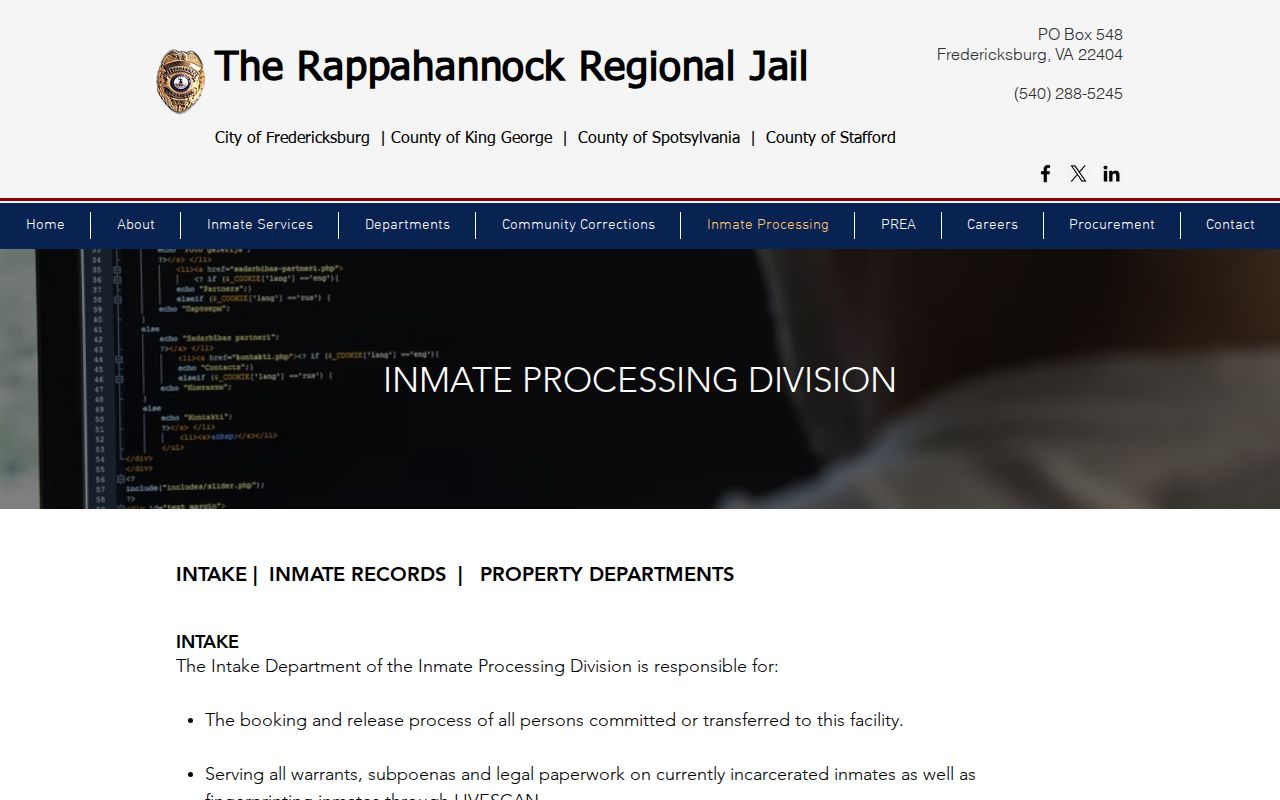
Rappahannock Regional Jail Intake books and releases people, serves warrants and legal papers on current inmates, schedules bond hearings for people served with new warrants, and processes release or transfer. Already in custody? Ask the jail about booking or bond logistics first. Then ask the Sheriff or the return court about warrant status and what to do next in the case. The official RRJ intake page separates those custody tasks from the clerk's and magistrate's work for Stafford County cases.
RRJ bonding runs seven days a week. In Stafford County, the amount and release terms still depend on the case and any detainer.
Arrest Warrants, Summonses, and Bench Warrants
A summons orders a person to appear, with no arrest on the spot. An arrest warrant follows a probable-cause review and authorizes custody. A bench or FTA warrant usually follows a missed court date or a ignored order. A capias can arise in criminal, bail, support, or civil process. Stafford County court records may use different terms, so ask the return clerk to name the exact process.
| Process | Why it may issue | Stafford confirmation |
|---|---|---|
| Summons | Notice to appear | Return court clerk |
| Arrest warrant | Probable cause supports arrest process | Magistrate, Sheriff and return court |
| Bench / FTA | Missed setting or court order | Issuing clerk and Sheriff |
A Federal Warrant Uses a Different Stafford Route
Stafford County sits in the Alexandria Division of the Eastern District of Virginia. Federal warrants come from federal courts and agencies, not from Stafford OCIS or the Sheriff's public pages. PACER can show federal docket entries, but it is no guaranteed live-warrant search; some records are sealed or not separately searchable. The U.S. Marshals Eastern District and its Capital Area Regional Fugitive Task Force coordinate federal and interstate fugitive work with partner agencies. On a possible federal matter, contact the federal clerk, the Marshals, or counsel. Beware phone demands for money to stop an arrest. That is not how any of this works. The U.S. Marshals Eastern District information lists district contacts and task-force coverage.
Handling an Arrest Warrant in Your Name
Pick up the phone first. Call the Sheriff's Warrant Section and the return court to confirm the warrant, case number, bond amount, and next step. Facing a felony, probation, or other serious matter, get a Virginia defense lawyer before you walk in. If the court sets a surrender, nail down the place and time, since Stafford County publishes no universal walk-through schedule or warrant-specific form.
Do not travel without a plan: Ask the Sheriff, clerk or lawyer which office should receive you and whether bond or a hearing is set.
RRJ handles booking and release if an arrest happens. The Stafford County case itself continues in Circuit, General District, or JDR court.
Search Warrants Are a Separate Record
An arrest warrant lets police take someone into custody. A search warrant is different. It covers a described place, person, or item. Virginia Code § 19.2-54 generally opens the affidavit, warrant, and return after execution, or 15 days from issuance, unless a court temporarily seals them. That filing rule is not an arrest-warrant search route. For a public case or process question, call the Stafford Sheriff's Warrant Section and the return clerk; for sealed or investigative material, ask the office which statutory limit applies.